What is a Type 1, 2, 3 or 4 Fire Risk Assessment?
A written Fire Risk Assessment is now a legal requirement for all non-domestic premises and applicable dwellings under Article 9 of The Regulatory Reform (Fire Safety) Order 2005 (FSO).
A Fire Risk Assessment involves a thorough evaluation of premises to identify fire hazards, assess the risk of a fire occurring, and recommend appropriate fire safety measures. The assessment should be conducted by a competent person who possesses the necessary knowledge, skills, and experience in fire safety.
It’s important to note that the responsibility for ensuring fire safety lies with the “responsible person,” who is typically the employer or the person in control of the premises, who must ensure that a fire risk assessment is carried out, implement the recommended control measures, and regularly review and update the assessment.
Non-compliance with fire safety regulations in the UK can result in legal penalties, including unlimited fines and/or imprisonment, and can have serious consequences in terms of the life safety of occupants and property.


Invasive (Types 2 & 4) and non-invasive (Types 1 & 3) fire risk assessments
Fire risk assessments can be invasive (intrusive – Types 2 & 4), requiring destructive actions in their undertaking, or non invasive (non-intrusive – Types 1 & 3), being undertaken without recourse to any destructive actions or the need for specialist contractors.
British Standard 8674:2025 sets out competence criteria relating to non-invasive fire risk assessments.
Non-invasive assessments could include, for example, inspections involving the removal and replacement of fixed hatches, access panels or suspended ceiling components (other than fire-resisting ceilings), or the creation of very small easily repaired access holes for specialized cameras and probes. The conditions assessed in this way might, in turn, prompt the need for invasive fire risk assessments to enable detection of structural or other vulnerabilities.
However, British Standard 8674:2025 does not cover the invasive aspects of such an assessment.
Type 1 Fire Risk Assessment
Type 1: Common parts only (non‑intrusive)
A Type 1 Fire Risk Assessment (FRA) is the basic, non-intrusive inspection typically suitable where there is clear evidence of a building’s structural integrity. It relies on visual checks and existing information, without opening up walls or ceilings, though a thorough inspection of accessible compartmentation, fire doors, roof voids (where practicable), and service areas is included.
The assessment also considers means of escape, passive fire protection measures, and external wall construction, including cladding and attachments. Where construction is traditional masonry and presents no significant risk of fire spread, it is usually deemed acceptable without further investigation; otherwise, a more detailed external wall assessment may be required.
Type 2 Fire Risk Assessment (FRA)
Type 2: Common parts only (intrusive)
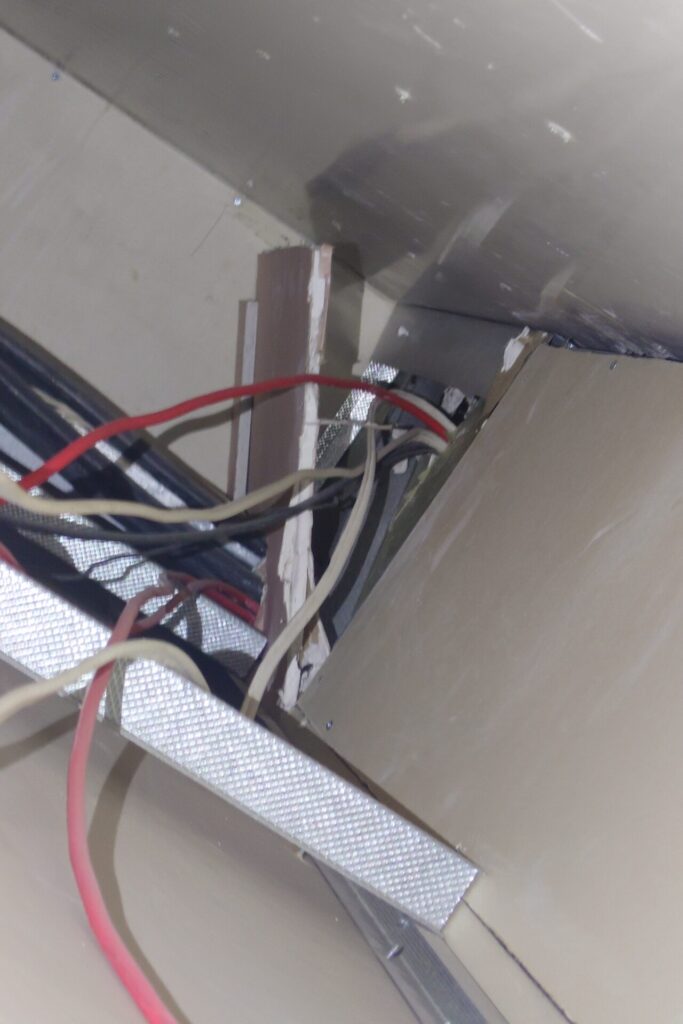
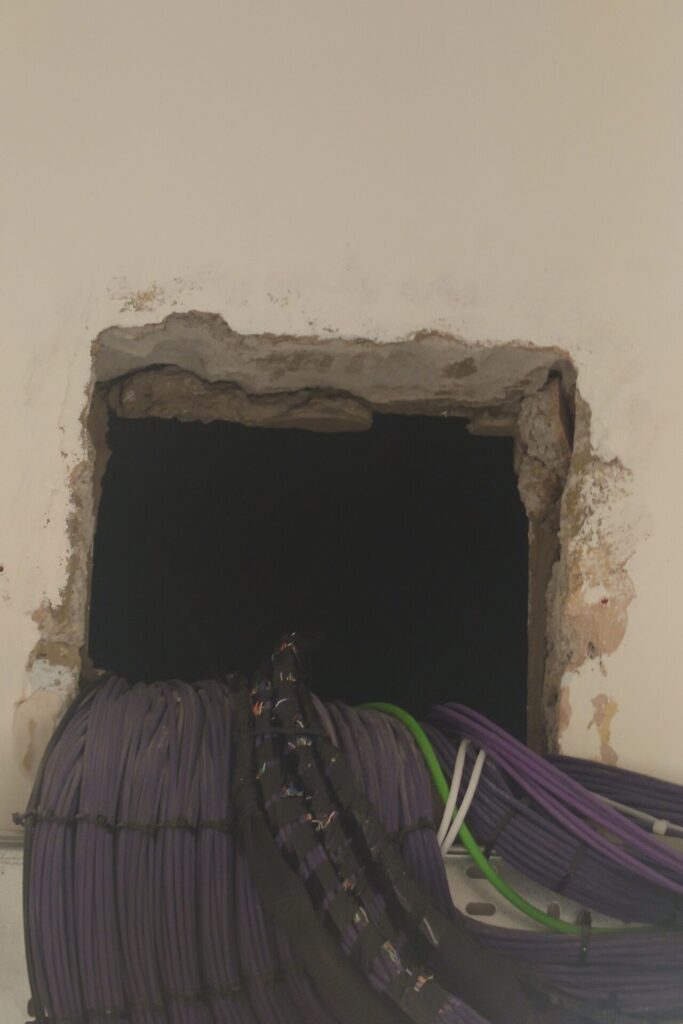
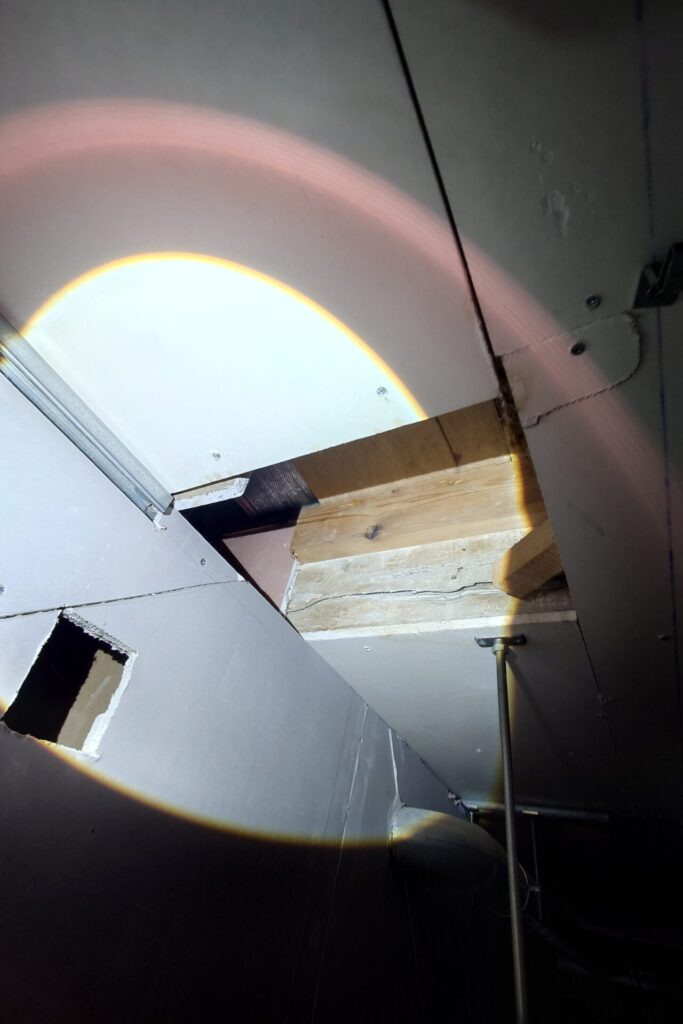
The scope and objectives of a Type 2 Fire Risk Assessment (FRA) are generally similar to those of a Type 1 FRA, except that there is additional intrusive inspection, carried out on a sampling basis.
This usually necessitates the presence of a contractor for the purpose of opening up construction and making good after the inspection.
In order to check the integrity of separating construction, the areas in which intrusive inspection is carried out will consist of communal areas. A Type 2 FRA is usually a one‑off exercise, which is carried out only if there is good reason to suspect serious structural deficiencies that could lead to spread of fire beyond the compartment of fire origin.
The need for a Type 2 FRA is sometimes identified in a Type 1 FRA, but ought not to be recommended as a matter of course.
Type 3 Fire Risk Assessment (FRA)
Type 3: Common parts and dwellings (non‑intrusive)
A Type 3 Fire Risk Assessment includes the work involved in a Type 1 FRA, but also considers precautions within the dwellings themselves.
This type of FRA considers the provision, arrangements and maintenance of fire precautionary measures within the control of landlords, leaseholders, other dutyholders or occupiers, such as means of escape, fire detection systems and sprinkler or water mist systems, within at least a sample of the dwellings. It also considers any alterations or actions by residents that could compromise the effectiveness of the fire precautions. Measures to prevent fire are not considered unless (e.g. in the case of maintenance of the electrical and heating installations) the measures are within the control of, for example, a dutyholder.
It can also provide guidance on best practice, going beyond minimum legal requirements—for example, recommending additional smoke or heat alarms.
Type 4 Fire Risk Assessment (FRA)
Type 4: Common parts and dwellings (intrusive)
A Type 4 FRA has the same scope of work as a Type 3 FRA, except that there is a degree of intrusive inspection, in both the common parts and the dwellings, carried out on a sampling basis.
This usually necessitates the presence of a contractor for the purpose of opening up construction and making good after the inspection.
Type 4 FRA is the most comprehensive FRA, but is only appropriate in unusual circumstances, such as when a new landlord takes over a building in which the history of works carried out is unknown and there is reason to suspect serious risk to residents from both a fire in their own dwellings and a fire in a neighbour’s dwelling.
As well as considering the safety of residents in the event of a fire in their own dwelling, consideration is given to the potential for fire to spread internally from that dwelling to others. Routes to assess include riser shafts running within the dwellings, bathroom and kitchen extract ducts, drainage pipework and penetrations for other services, such as gas or electricity.
Risk Level of Building
There is no predetermined level of fire risk for any specific type of building or premises, although terms such as “high”, “moderate” and “low” are frequently used and occur in British Standard 8674:2025 to provide context.
Fire risk assessments are based upon the probability of a fire occurring and its likely consequences, with factors such as the number and nature of occupants, the use to which the premises are put, and hazards, construction and complexity all being taken into account during the assessment process.
Having three core levels of competence, which broadly relate to “high”, “moderate” and “low” levels of risk, can assist duty holders in appointing a suitable fire risk assessor, and further guidance in this regard can be found, for example, on Government or industry websites.
It is, however, emphasised that appointment of a fire risk assessor always remains the responsibility of the duty holder. British Standard 8674:2025 does not therefore cover the selection process used to appoint a fire risk assessor.
Kaden Fire Safety Consultants Ltd. Have assessors who can perform FRAs on buildings ranging from Low to High.
Competency of Risk Assessor
Fire Risk Assessor Competence: Why BS 8674:2025 Matters to You?
BS 8674:2025 is the UK code of practice that sets out a clear framework for the competence of individual fire risk assessors. While it is not legislation, it represents the most up-to-date and authoritative benchmark for demonstrating competence under current fire safety law.
Why this matters now to you as an RP?
Fire risk assessments are no longer judged solely on whether one exists — they are judged on who carried them out and whether they were competent to do so. BS 8674:2025 sets out the nationally recognised framework for the competence of individual fire risk assessors. While not law, it is rapidly becoming the benchmark used by enforcing authorities, insurers, and courts when assessing whether responsible persons have met their legal duties.
Kaden Fire Safety have risk assessors and validators who can undertake and validate foundation level to advanced level FRAs and we are aligned with BS 8674:2025 and all assessors are registered with National Fire Risk Assessors Register (NFRAR).
If your fire risk assessment were audited today, could you clearly evidence that the assessor you appointed was
competent for the complexity and risk of your premises?
The Correct PAS or British Standard
PAS 79-2 has been revoked and has been replaced with BS 9792:2025 – Fire risk assessment – Housing – Code of practice. This has a 9 step approach not the pre existing 5 step approach.
This means that there are a large amount of RP’s of residential buildings that are now potentially exposed and vulnerable, if their previous FRA was on a PAS 79-2 template and it has not been reviewed.
Residential buildings (BS 9792:2025) — especially those with sleeping risk — face the highest level of enforcement scrutiny. Following the introduction of The Fire Safety Act 2021, The Building Safety Act 2022, The Fire Safety (England) Regulations 2022, BS 8674:2025 (Built environment – Framework for competence of individual fire risk assessors – Code of practice) & BS 9792:2025 (Fire risk assessment – Housing – Code of practice), regulators increasingly examine not just the fire risk assessment, but who carried it out and whether they were competent for that type of building.
Non-housing (Commercial/non-residential) Fire Risk Assessments are still formulated according to PAS 79-1.
Key exposure
Company and Individual Accreditations
BS 8674:2025 is the code of practice for fire risk assessor competency – it does not perform due diligence for you. As an RP this means you still have to have the competency/knowledge to assess the assessors qualifications and experience… as you can imagine this can easily be fabricated. Importantly, legal responsibility cannot be delegated. Reliance on a contractor does not remove liability from the responsible person.
As a company comprising of BAFE SP205 scheme approved Foundation to Advanced-level fire risk assessors and validators, our approach is built around:
Both the PAS 79-1 & BS 9792:2025 code of practice sets out methodology to undertake FRAs, and BS 8674:2025 sets out the legal framework for assessor competency these do not assess the company. Schemes like BAFE’s SP205 scheme assesses the company’s management of processes such as ensuring the correct templates are use and that assessors and validators are competent for that building risk level.

What happens if competence cannot be demonstrated?
Failure to appoint a demonstrably competent fire risk assessor may result in:
• enforcement notices requiring reassessment,
• prosecution with unlimited fines,
• increased scrutiny of directors and senior managers,
• invalid or unreliable fire risk assessments,
• increased civil liability and insurance challenges following an incident.
Importantly, legal responsibility cannot be delegated. Reliance on a contractor does not remove liability from the
responsible person.
Q) How can Kaden Fire Safety Consultants Ltd help?
A) A Fire Risk Assessment You Can Defend!
Fire risk assessments are no longer judged solely on whether one exists — they are judged on who carried them out and whether they were competent to do so.
BS 8674:2025 sets out the nationally recognised framework for the competence of individual fire risk assessors. While not law, it is rapidly becoming the benchmark used by enforcing authorities, insurers, and courts when assessing whether responsible persons have met their legal duties.
Kaden Fire Safety have risk assessors and validators who can undertake and validate foundation level to advanced level FRAs and we are aligned with BS 8674:2025.
Our Alignment with BS 8674:2025, NFRAR registration and BAFE SP205 scheme certification. As a company comprising of BAFE SP205 scheme approved Intermediate & advanced-level fire risk assessors and validators, our approach is built around:
• aligning assessor competence with the complexity and risk profile of your premises,
• ensuring all assessors are on the National Fire Risk Assessors Register (NFRAR)
• producing fire risk assessments that are not only suitable and sufficient, but legally defensible,
• validated by a 3rd party certified validator of the appropriate level of competency required
• supporting responsible persons in evidencing that they have taken all reasonable steps to comply with fire safety law.
Our service is designed to protect you not just operationally — but legally, should your fire risk assessment ever be scrutinised. Because the real test of a fire risk assessment is not the day it’s written — it’s the day it’s challenged.